
What if the strongest part of your scholarship application isn’t your GPA-but the online courses you chose on your own? In a selection process crowded with similar grades and generic essays, self-directed learning signals ambition, discipline, and international readiness.
Today, many scholarship committees look beyond transcripts to find applicants who can prove initiative, academic curiosity, and practical skills. Well-chosen online courses can help you demonstrate all three-especially when they align with your field, career goals, and the scholarship’s mission.
But not every certificate adds value, and not every platform carries the same weight. To use online learning strategically, you need to know which courses strengthen your profile, how to present them, and where they fit into a competitive application.
This guide shows how online courses can move from being a simple résumé booster to becoming credible evidence of merit. If used correctly, they can help turn an ordinary application into one that scholarship reviewers remember.
What International Scholarship Committees Look for-and Why Online Courses Strengthen Your Profile
What actually gets a scholarship application moved into the serious pile? Committees usually assess four things at once: academic readiness, consistency, fit with the program’s goals, and the likelihood that the applicant will finish what they start. Online courses help because they create visible proof in areas where many applicants only make claims.
- Evidence of initiative: A completed sequence on Coursera, edX, or FutureLearn shows you did not wait for a formal institution to hand you direction.
- Academic risk reduction: If your prior transcript is uneven, recent coursework in statistics, research methods, or academic writing can reassure reviewers that you are prepared now, not just “interested.”
- Program alignment: Strong applications make a clear bridge between the course and the scholarship’s mission, especially in public policy, STEM, education, and development-focused awards.
Short answer: reviewers look for patterns, not isolated achievements. A candidate applying for a climate policy scholarship who completed GIS mapping, environmental economics, and policy analysis online presents a more credible profile than someone with a polished essay but no recent academic engagement.
One quick observation from real application reviews: committees notice when certificates are random. Three unrelated beginner courses can look like browsing; a tight learning track, supported by project work or a portfolio in LinkedIn Learning or Google Drive, reads as intentional preparation.
And yes, they do care about finish rate. If you list five courses and only one is complete, that can quietly weaken your story. Online learning strengthens your profile only when it signals discipline, direction, and readiness under limited supervision.
How to Use Online Courses to Meet Scholarship Eligibility, Build Proof of Merit, and Improve Your Application
Start by reading the scholarship criteria like an admissions officer, not like a course shopper. Separate requirements into three buckets: formal eligibility, academic readiness, and competitive signals. Then choose online courses that map to each bucket-say, a data analysis specialization for a public policy scholarship, plus an academic writing course if the application demands research potential.
Proof matters. A certificate alone rarely changes an outcome unless you can connect it to a selection metric. Build a small evidence file for each course: certificate PDF, graded assignments, capstone output, discussion contributions, and a one-line result such as “built a regression model on public health data.” Platforms like Coursera, edX, and FutureLearn make this easier if you save the course page, syllabus, and assessment details before access expires.
One mistake I see often: applicants list ten unrelated courses and hope volume looks impressive. It usually weakens the case. Three tightly aligned courses with visible outputs look far stronger than a random collection of badges.
- Use course titles strategically in your CV: include institution, level, and assessed project.
- Reference one course in your personal statement only where it supports a claim, not as a separate achievement dump.
- Ask a recommender to mention how you applied the learning in work, volunteering, or research.
A real example: an applicant targeting a climate scholarship completed a GIS course on ESRI Academy and uploaded a flood-risk map to a portfolio. That single artifact did more than the certificate because reviewers could see skill transfer. Honestly, committees notice when learning became action.
If a scholarship asks for leadership, community impact, or field readiness, convert the course into something observable before you submit. Otherwise, it stays theoretical-and theoretical achievements are easy to overlook.
Common Mistakes to Avoid When Using Online Courses for International Scholarship Qualification
One of the fastest ways to weaken a scholarship application is collecting random certificates with no narrative behind them. Review panels often notice when an applicant has taken a Python course, a public health module, and a marketing bootcamp with no visible link to the target program; it reads as résumé stuffing, not academic intent. Better to show a tight learning arc that supports your proposed field and future research direction.
Another common mistake is treating course completion as enough. It isn’t. Many scholarship reviewers care less about the badge itself and more about what you did with the learning-project work, writing samples, portfolio pieces, or evidence of skill transfer. If you finished a data analysis course on Coursera or edX, attach a GitHub project, policy brief, or published case analysis instead of just listing the certificate title.
- Ignoring accreditation or provider reputation when the scholarship explicitly values formal academic preparation.
- Uploading certificates without dates, course hours, or syllabus details, which makes verification harder.
- Using course language that does not match the scholarship’s academic focus or stated competency criteria.
Small thing. Applicants also underestimate timing. I have seen candidates complete impressive courses after the application deadline and then mention them vaguely in personal statements, which creates a credibility gap because the documents do not align.
A real example: a student applying for a climate policy scholarship listed six sustainability courses from Udemy, but none included assessed assignments or instructor feedback. When she replaced four of them with two university-backed courses and added a short policy memo derived from the coursework, the application looked more serious. Scholarship committees are not just asking, “Did you learn?” They are asking whether your learning can be trusted.
Summary of Recommendations
International scholarships rarely go to applicants with good intentions alone-they go to candidates who can prove readiness, consistency, and academic direction. Online courses help when they are chosen strategically, completed seriously, and connected clearly to your study goals. Focus less on collecting certificates and more on building a credible profile that shows discipline, relevant skills, and initiative.
- Choose courses that match your target degree or scholarship field.
- Finish what you start and document strong results.
- Use each course to strengthen your application story, not just your résumé.
The best decision is to treat online learning as evidence of potential-not a shortcut, but a competitive advantage when used with purpose.
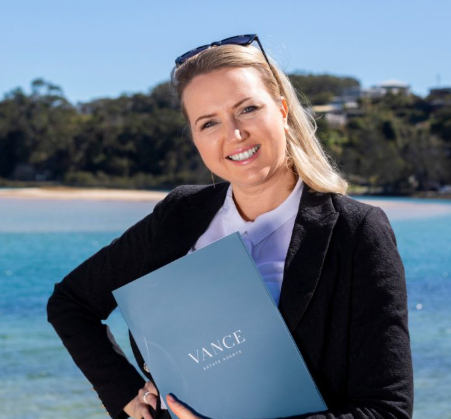
With a Doctorate in Instructional Design and Technology, Dr. Elena Vance is at the forefront of digital education. Her mission at A-Plus NZ is to provide world-class E-Learning experiences that are both accessible and transformative. Dr. Vance combines academic rigor with innovative teaching methods to ensure every learner achieves ‘A-Plus’ results in the global marketplace.